
From Well-being to Grant Writing: Spring Training Series for Postdocs Welcomed 263 Participants
28 May 2026
The Charles University Postdoctoral Hub organized another series of workshops during the spring months aimed at the professional and personal development of early-career researchers. The programme offered topics relevant across disciplines – from mental health and well-being in academia through open science and research data management to grant proposal writing. The workshops took place both online and in person at Kampus Hybernská and the Central Library of Charles University and welcomed a total of 263 participants.
The series opened with the workshop Well-being for academics, which focused on the mental health and well-being of postdoctoral researchers. Participants explored how to address topics such as motivation, relationships, meaningfulness of work, and burnout prevention within the academic environment. The workshop also provided practical strategies for supporting psychological well-being in everyday academic life.
The workshop Introduction into Open Science & Publishing introduced the basic principles of open science and open-access publishing. Participants learned about open-access publishing options, the use of Creative Commons licences, as well as topics such as preprints and open peer review. The course also focused on how to increase the reusability and accessibility of research outputs.
The practically oriented workshop Science Communication: Practical Training helped participants communicate their research more effectively to different target audiences through hands-on exercises. It focused on how to present science clearly and attractively beyond the academic environment.
The topic of transferring research results into practice was addressed by the workshop Commercialization of Research Outputs and Intellectual Property. Participants gained an overview of intellectual property protection, possibilities for commercializing research outputs, and strategies for the use of industrial property rights.
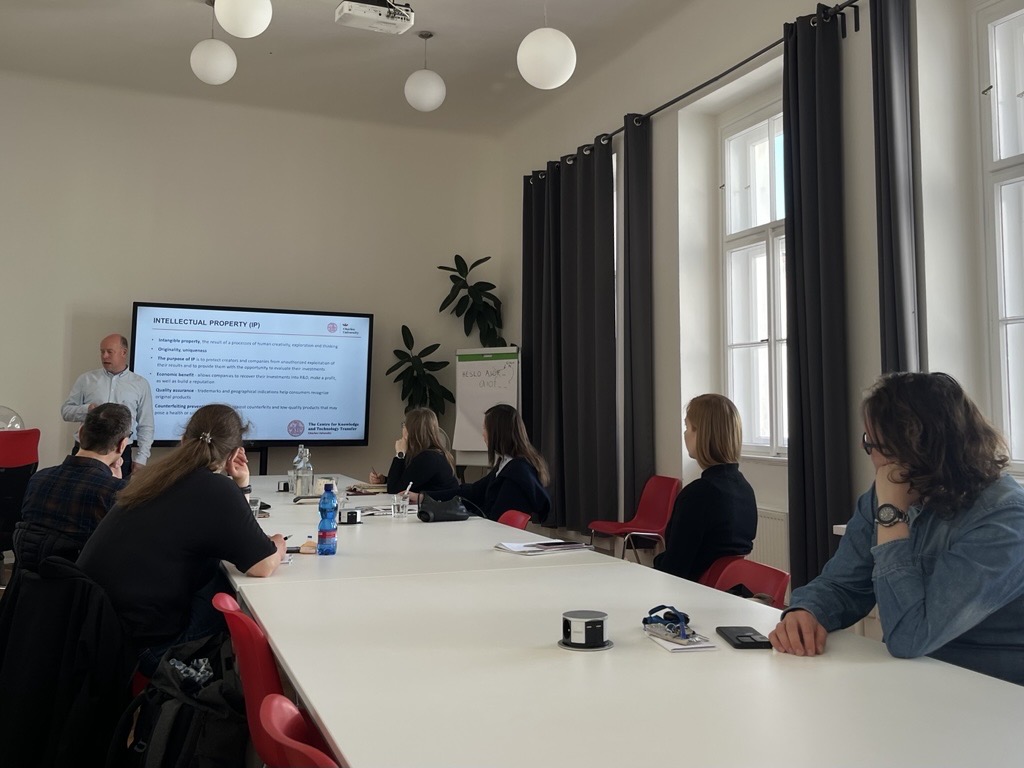
Commercialization of Research Outputs and Intellectual Property Workshop
The workshop Research Data Management followed with a focus on FAIR principles and the preparation of Data Management Plans. The session introduced practical approaches to managing, sharing, and storing research data, as well as questions related to responsible data sharing in line with the principle “as open as possible, as closed as necessary.”
The workshop Introduction to R once again attracted significant interest. Participants were introduced to the basics of working with the R programming language. Due to the high demand, we are planning to expand our R-focused course offering in the autumn series.
The spring series also included two new networking and discussion formats called Postdoc Forum, organized by Charles University and Czexpats in Science. This new format focuses on sharing experiences related to career development, peer mentoring, and opening discussions on topics connected to the everyday reality of postdocs. The first session, Strategic Career Thinking: Thinking About Your Career Before Planning It, provided space for reflecting on career goals, strengths, and professional priorities. The second forum, Postdocs Between Roles – Navigating Responsibility, Communication and Expectations, focused on the specific position of postdoctoral researchers as scientists, mentors, and team members, opening discussions on supervising students, communication with PIs, and managing different types of responsibilities within academia.

New Postdoc Forum format, organized by Charles University and Czexpats in Science
An important aspect of academic work was covered in the two-part workshop How to write a useful review: Becoming a peer reviewer for articles and proposals. Participants gained insight into the peer review process from the perspective of editors and experienced reviewers and practiced writing high-quality and constructive reviews for academic articles and grant proposals.
The workshop Interactive research ethics training: Dilemma games addressed the topic of academic ethics through an interactive method based on model situations developed by Erasmus University Rotterdam. Participants discussed ethical dilemmas connected with everyday research practice and reflected on decision-making in situations without clear-cut solutions.
Public engagement in research was explored in the workshop Citizen science. The course introduced different forms of citizen science projects and demonstrated how the public can be actively involved in the research process. It also included examples of good practice and discussions on the possibilities of applying citizen science across disciplines.
Practical experience with grant proposal preparation was offered in the workshop Writing a Successful Grant Proposal. Participants worked on their own project proposals, discussed their strengths and weaknesses, and received feedback from experienced grant experts and successful applicants.
The spring series concluded with the workshop Various Career Pathways of PhD holders, which offered a broader perspective on career opportunities after completing doctoral studies. Discussions covered both academic and non-academic career paths, transferable skills gained during PhD studies, and individual priorities when deciding on future professional direction.
Altogether, the spring training series offered twelve workshops and two Postdoc Forum sessions, once again confirming the growing interest of postdoctoral researchers in career development opportunities. The series created space not only for the development of practical skills, but also for networking and sharing experiences among postdocs across faculties and disciplines. As part of the Postdoctoral Hub autumn programme 2026, we are already preparing both new and well-established workshops for the upcoming season.

N.B. Funded by the European Union. Views and opinions expressed are however those of the author(s) only and do not necessarily reflect those of the European Union or the European Research Executive Agency. Neither the European Union nor the granting authority can be held responsible for them.