
STEAM
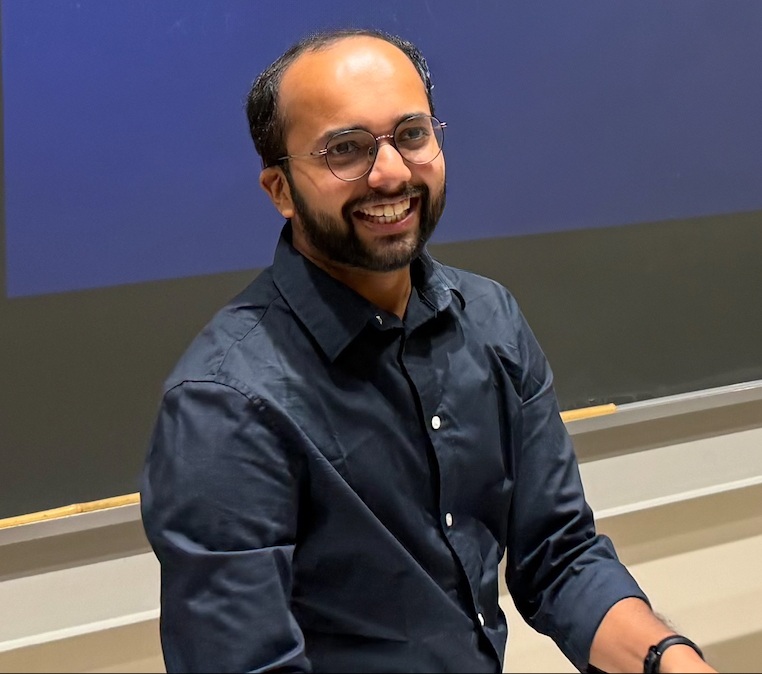
Devi Prasad Adiyeri Saseendran
Systematically Engineered Ternary Electrocatalysts for Anion Exchange Membrane Electrolyzers
Faculty of Mathematics and Physics
Leancat Electrolyzers
Owing to the current global energy demand and need for reducing carbon emissions, the hydrogen economy holds huge potential towards future sustainable energy technologies. Green hydrogen, produced via electrolysis driven by renewable energy sources like solar, wind and tidal, is gaining significant attention due to its potential in reducing greenhouse gas emissions. Alkaline electrolysis (AE) and proton exchange membrane (PEM) electrolysis serves as two major technologies for the production of hydrogen at low temperatures. Although being mature technologies, AE and PEM require highly concentrated alkaline electrolyte and platinum group metal (PGM) catalysts respectively, for their operation. This demands for the development of safer to handle and earth abundant catalyst-based alternatives, to be employed in electrolysis systems. In this regard, anion exchange membrane (AEM) water electrolyzers serve as a promising candidate in advancing the hydrogen economy, leveraging the advantages of both PEM and AE water electrolysis systems. Operating in alkaline conditions, AEM electrolyzers avail non-precious metal catalysts based on earth abundant metals, thus lowering the dependence on expensive PGM catalysts. The use of cost-effective and durable electrodes in AEM electrolyzers reduces the production costs and benefits in enhancing the scalability of hydrogen generation technologies. Bringing AEM technology to an advanced level requires optimization of the cell design, membranes and development of durable electrocatalysts accompanied with laboratory scale testing of electrolyzer single cells. Herein, through the STEAM project we aim on the development and testing of new ternary electrocatalysts based on transition metals to be used as electrode materials in next generation AEM electrolyzers. Through a custom developed etched membrane coating technique, we target to employ ternary electrocatalyst coated membranes in AEM electrolyzers and their lab scale testing. In addition, STEAM project also involves understanding the structural transformations within the as developed ternary electrocatalysts under operational electrolysis conditions, using operando X-ray techniques. Investigating the electrocatalysts in operando, will help to understand their degradation mechanisms, benefiting towards the selection of best electrocatalysts to be upscaled for industrially viable active areas, usable in AEM electrolyzer shortstacks, which will be tested in cooperation with Leancat electrolyzer company during the non-academic secondment. Thus, with STEAM project we intend on developing new ternary electrocatalysts, followed by operando characterization and validating its integration into single cell and lab scale larger area coated AEM electrolyzer setups, thereby contributing towards the advancement of AEM electrolyzer based hydrogen generation technology.
Sustainable Development Goals


Meet the Project
If you had to explain your project to someone outside your field, how would you describe it in three sentences?
My project targets to develop new catalysts (in simple words: substance that accelerates chemical processes) for being used in electrodes for water splitting to produce hydrogen: a potential green fuel of the future. I plan to investigate how different transition metal ternary compositions and catalyst loadings on etched membranes contribute towards the water splitting efficiency in AEM electrolyzers. Eventually, the aim is to identify potential ternary catalysts with improved hydrogen production capability and to nurture its integration to industrially viable electrolyzers.
What fascinates you most about the topic of your research project?
What really fascinates me is the quest for that specific metal composition of ternary catalyst that will impart improved performance and stability for AEM electrolyzers. Even a small wt% change of one metal within the ternary matrix could lead to drastic change in electrocatalytic performance. So, finding the apt ternary metal combinations in the right composition is challenging, but at the same time brings immense curiosity. In addition, working with the state of the art membrane etching technique/instrumentation (custom developed research facility at NG group) would help me in exploring a wide spectrum of ternary metal combinations within the project timespan, which would be an asset for the execution of STEAM project. This minor curiosity and resulting outputs could significantly help in the advancement of new AEM electrolyzers, thereby contributing to next generation green hydrogen fuel technologies.
How does your research contribute specifically to achieving the UN Sustainable Development Goals?
My research project contributes first to SDG 7 (Affordable and Clean Energy) by developing PGM-free ternary or low-PGM electrocatalysts for AEM water electrolyzers (AEM-WEs), thereby reducing the cost and resource dependence of green hydrogen production. This upholds the broader deployment of clean hydrogen technologies and enhances energy access based on renewable sources. STEAM further supports SDG 12 (Responsible Consumption and Production) by minimizing or eliminating the use of scarce and critical raw materials like PGMs, thereby supporting the use of sustainable materials in energy technologies. In addition, it also supports SDG 13 (Climate Action) by directly contributing towards the production of green hydrogen via water electrolysis powered by renewable electricity. Thus supporting the development of more accessible and sustainable electrolysis technologies essential for reducing global greenhouse gas emissions. Finally, STEAM also contributes towards SDG 9 (Industry, Innovation and Infrastructure) by making use of advanced operando characterization techniques which will deepen the understanding of catalyst behavior under operating conditions, thus accelerating the development of industrially relevant catalysts technologies.

N.B. Funded by the European Union. Views and opinions expressed are however those of the author(s) only and do not necessarily reflect those of the European Union or the European Research Executive Agency. Neither the European Union nor the granting authority can be held responsible for them.